Advanced Manufacturing and Robotics
AI-driven robotics is transforming industrial production — improving efficiency, enabling flexible manufacturing, and reshaping the relationship between human workers and automated systems.
Collective Intelligence
Research & Analysis
Industrial Transformation
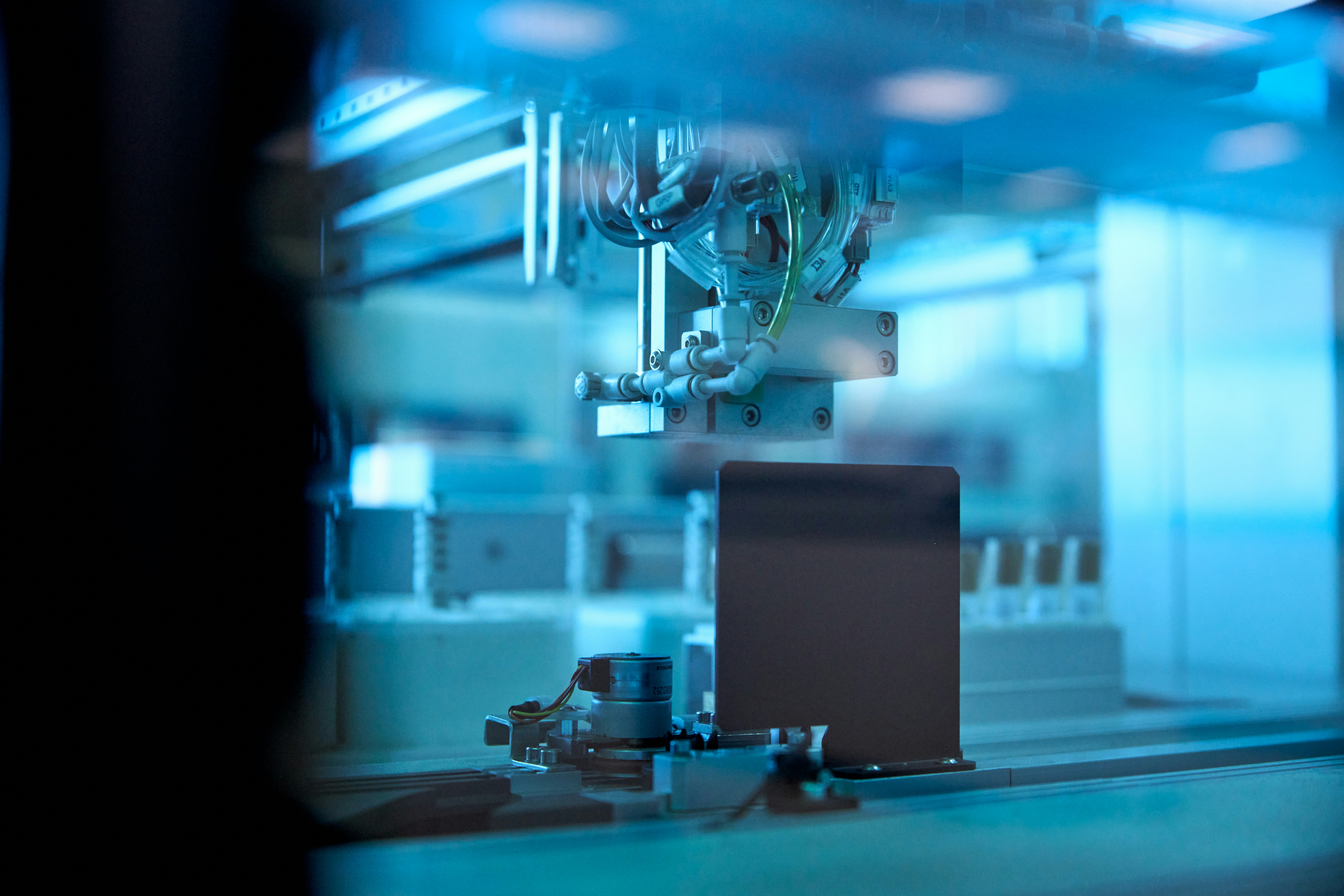
Manufacturing is undergoing technological transformation driven by robotics and artificial intelligence. Advanced systems enhance production efficiency, flexibility, and sustainability. Industrial processes are becoming more adaptive and data-driven, enabling manufacturers to respond to demand signals and quality failures in ways that rigid conventional production lines cannot.
Automation improves precision and productivity. Machines perform repetitive tasks with consistency, reducing operational costs and waste. AI-driven systems optimise workflows and quality control. Industrial transformation creates opportunities and challenges: productivity gains support economic growth, while workforce transitions require skill development and adaptation.
Flexible Production Models
Traditional manufacturing often relies on standardised processes optimised for a narrow range of products at high volume. AI is enabling flexible production — systems that adapt to changing requirements and customer preferences without the downtime and reconfiguration costs that previously made small-batch manufacturing economically prohibitive. Customisation becomes viable at scale, supporting the shift toward personalised products and shorter product cycles that many markets now demand.
Supply chain optimisation complements production flexibility. Predictive analytics improve inventory management by anticipating demand shifts before they manifest in order volumes. Visibility across supply networks enhances resilience, allowing manufacturers to identify and respond to disruptions before they cascade into production stoppages. The combination of adaptive production and intelligent logistics is reshaping what manufacturers can profitably offer.
Human-Machine Collaboration
AI does not replace human workers in manufacturing — it reshapes their roles. Machines handle routine and physically demanding tasks, allowing humans to focus on activities requiring contextual judgement, problem-solving, and interpersonal coordination. Skills in engineering, data analysis, and systems management become more valuable; pure physical labour input becomes less so. The most effective advanced manufacturing environments treat automation as a tool that amplifies human capability rather than a substitute for it.
Collaborative robotics — systems designed to work alongside human operators rather than in separate, fenced environments — are enabling new forms of human-machine teaming on production lines. These systems combine the precision and endurance of machines with the adaptability and judgement of experienced operators, enabling task distributions that neither could achieve alone. Workforce development and ongoing training are essential to realising these benefits at scale.
Sustainability and Efficiency
Manufacturing has significant environmental impacts, and AI-driven optimisation is improving sustainability by reducing energy consumption, minimising material waste, and extending equipment lifespan through predictive maintenance. Efficient processes also reduce operating costs, creating a direct economic incentive that reinforces environmental objectives. This alignment of economic and environmental interests is one of the most promising structural features of advanced manufacturing transformation.
Organisations that embed sustainability into their AI-driven production systems are finding that efficiency gains and environmental stewardship are complementary rather than competing objectives. The data infrastructure required for AI-optimised manufacturing also provides the measurement capability needed to track and report environmental performance — enabling accountability alongside improvement.
Related Articles
AI and the Energy Equation: Sustainability vs Acceleration
AI infrastructure is reshaping global energy consumption. As data centres scale to support frontier model training, the tension between acceleration and sustainability is becoming one of the defining challenges of the AI era.
AI in Climate Modelling and Planetary Systems
Climate systems are extraordinarily complex. AI is introducing new methods for analysing environmental data, predicting extreme weather, and accelerating the simulations that inform global policy.
Agentic AI Goes to Work: From Chatbots to Autonomous Business Systems
AI agents are no longer a research concept. By mid-2026, 31% of enterprises are running at least one AI agent in production — and 40% of all enterprise applications are forecast to embed task-specific agents before the year ends. The shift from chatbot to autonomous worker is underway.
Read the full intelligence feed
Signals, analysis, and strategic context from across the global AI landscape — curated for leaders.
Back to Research →